This section is updated every two weeks
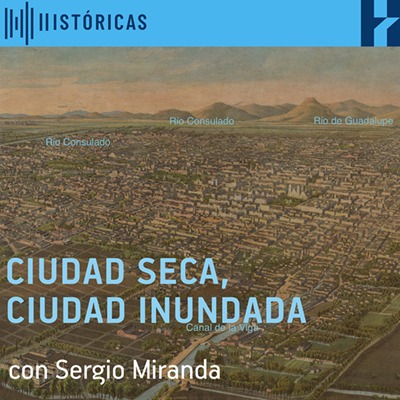
Históricas | Podcast
¿Alguna vez te has preguntado por qué la Ciudad de México es tan vulnerable a las inundaciones? El podcast Históricas (IIH, UNAM) explora esta compleja relación con el agua en su episodio “Ciudad seca, ciudad inundada”. El historiador Sergio Miranda Pacheco guía un viaje desde la Tenochtitlan indígena hasta la actualidad, mostrando cómo la ocupación española transformó la relación humano-naturaleza en un conflicto persistente. Un recorrido sonoro imprescindible para entender los orígenes de una crisis actual.
Escritura etnográfica podcast
El Instituto Colombiano de Antropología e Historia presenta “Escritura etnográfica”, un espacio sonoro que explora la relación entre la estética de la escritura y las exigencias de la publicación académica. En el primer episodio de la serie, la antropóloga Mónica Cuellar dialoga con Vladimir Caraballo, editor de la Revista Colombiana de Antropología, sobre investigación, etnografía y procesos de documentación.
Escucha este capítulo y más en el canal de YouTube del Instituto Colombiano de Antropología e Historia.
Revista Mexicana de Sociología: Número Especial. Políticas científicas y tecnológicas en América Latina
La Revista Mexicana de Sociología presenta un número especial dedicado a analizar las trayectorias, tensiones y transformaciones de las políticas científicas y tecnológicas en América Latina. A través de estudios de caso de Argentina, Brasil, Chile, Ecuador y México, este dossier examina los desafíos estructurales de la región: financiamiento inestable, tensión entre autonomía académica y control estatal, y la persistente brecha entre discursos y realidades. Una contribución al debate desde el pensamiento latinoamericano en CTS.
Acceso abierto en: https://revistamexicanadesociologia.unam.mx/index.php/rms/issue/view/4782
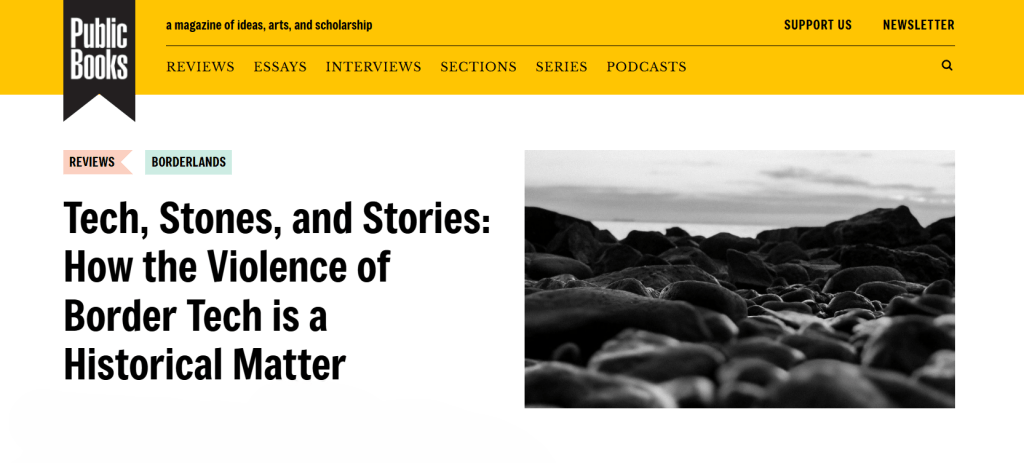
Tech, Stones, and Stories: How the Violence of Border Tech is a Historical Matter
Phillip Seuferling reviews Iván Chaar López’s “The Cybernetic Border”, reading it alongside Walter Benjamin to expose how border technologies, from obelisks to AI, carry forward settler colonial violence. The essay debunks myths of neutrality and progress, showing how “crisis” narratives weaponize repair. A powerful companion to the review by Kalindi Vora: both works reveal how “The Cybernetic Border” is essential to contesting today’s lethal borderscapes.
Read the review here.
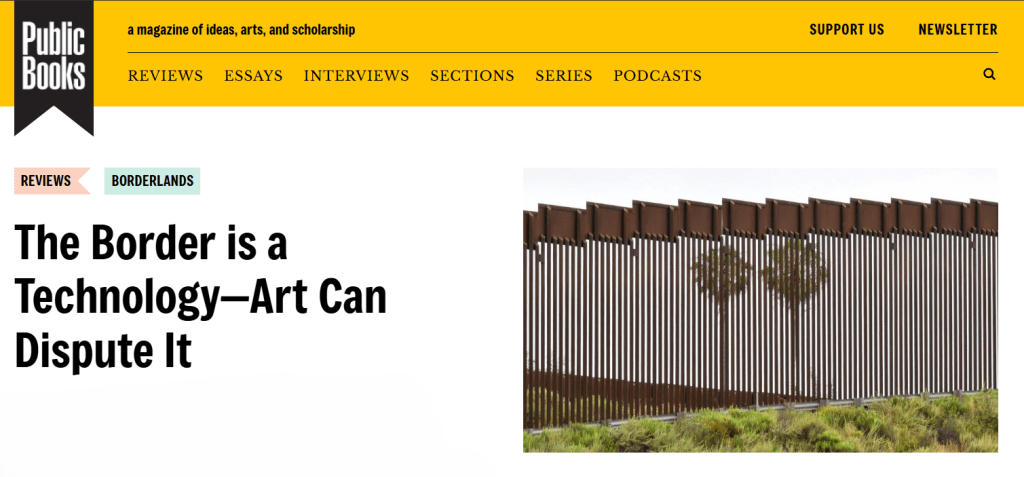
The Border is a Technology, Art can Dispute by Kalindi Vora
In Public Books, Kalindi Vora reviews Iván Chaar López’s “The Cybernetic Border,” examining how drone and data technologies enforce the US-Mexico border. Vora highlights the book’s key concept of a “technoaesthetics of dissent,” arguing that art, like Favianna Rodriguez’s butterfly symbol, can disrupt these carceral systems by reclaiming the structures of the sensible. A crucial read on technology, race, and resistance.
Read the review here.

Cambio Tecnológico Verde: Oportunidades y desafíos en América Latina
Esta semana les editores recomiendan el artículo que María de las Mercedes Menéndez escribe en ReVista, Ella examina las oportunidades y desafíos de la transición tecnológica verde en la región. A pesar de su vulnerabilidad climática y bajo nivel de patentes, América Latina posee abundantes recursos para energías renovables y minerales críticos. Mercedes Menéndez argumenta que, con políticas adecuadas, estas “ventanas verdes” pueden impulsar un desarrollo sostenible e inclusivo, superando los patrones históricos de desigualdad. Una lectura esencial para el debate regional.
Also available in english!
AI Dossier from GEICT
Explore “Artificial Intelligence Dossier” from the Interdisciplinary Studies in Science and Technology Group (GEICT) at UNICAMP. This collection offers critical, interdisciplinary perspectives on AI’s societal impacts, reflecting the group’s decade-long commitment to bridging science, technology, and society. An essential read for anyone interested in the social studies of technology.
MUTANTE: la ciencia cambiante
¿La ciencia es infalible? Esta semana nuestrxs editores recomiendan MUTANTE, un podcast que no se conforma con respuestas simples. Se celebran los logros de la ciencia, pero también se cuestionan sus métodos frente a frente. Una coproducción de Radio UAEM y UNAM Campus Morelos. Conduce Agustín Ávila-Casanueva.
Escucha en Spotify, y entérate de los episodios más nuevos en su página de Facebook.
Sociedad de Científicos Anónimos
Esta semana, nuestrxs editores invitan a descubrir la Sociedad de Científicos Anónimos, una iniciativa que lleva la ciencia fuera del laboratorio para dialogar con diversos públicos. Con un formato accesible y entretenido, promueve conversaciones horizontales donde la curiosidad es el único requisito.
Visita su página web para más información
Dossier PLÁSTICO – Revista de la Universidad de México
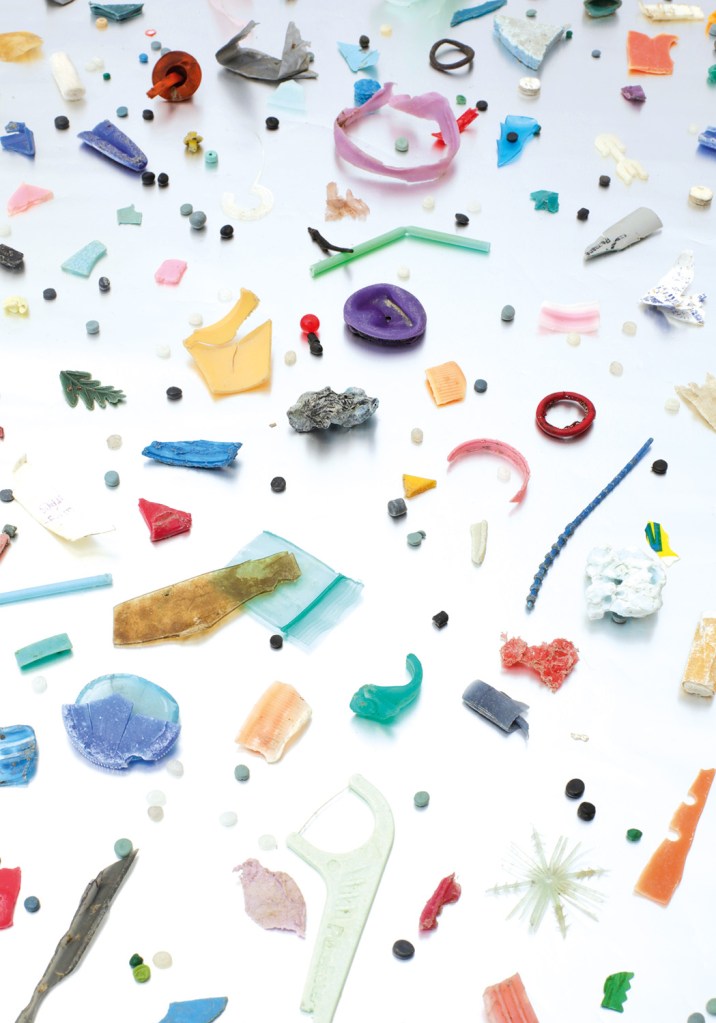
La Revista de la Universidad de México presentó en junio su dossier “PLÁSTICO”, explorando cómo este material define nuestra era. Desde la contaminación global y los microplásticos en nuestros cuerpos, hasta su presencia en el arte y la cultura, esta edición examina las múltiples dimensiones del plástico con textos de Luis Felipe Fabre, Guillermo Arreola, Gina Jiménez y más.
Lee el dossier aquí.

Limn’s Latest Issue – Climate’s Interiors
The editors recommend the 12th issue of Limn, which reframes climate change through interiors—cells, bodies, buildings, and systems. Featuring provocative, teachable articles by leading scholars, this visually rich collection invites new perspectives on ecological transformation. Explore the issue online now, and subscribe to receive future editions!
Read here and subscribe.
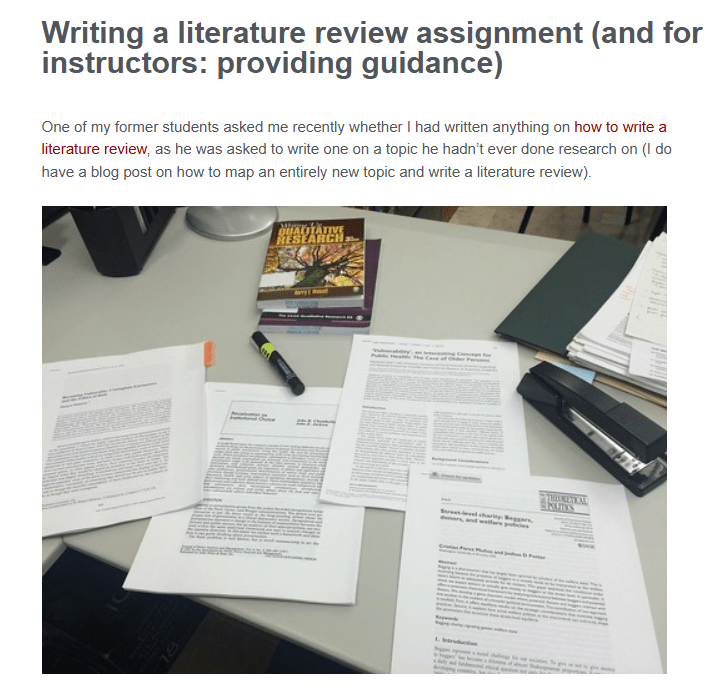
Writing a literature review assignment (and for instructors: providing guidance) by Raul Pacheco-Vega
Our pick this week is Raul Pacheco-Vega’s comprehensive guide on writing literature reviews. The post offers structured methodologies for students undertaking this common academic task, as well as guidance for instructors designing such assignments. His blog is a treasure trove of academic writing resources you won’t want to miss!
Access the guide here!
Ciencia, tecnología y política en Chile y Latinoamérica – Entrevista a Leandro Rodriguez
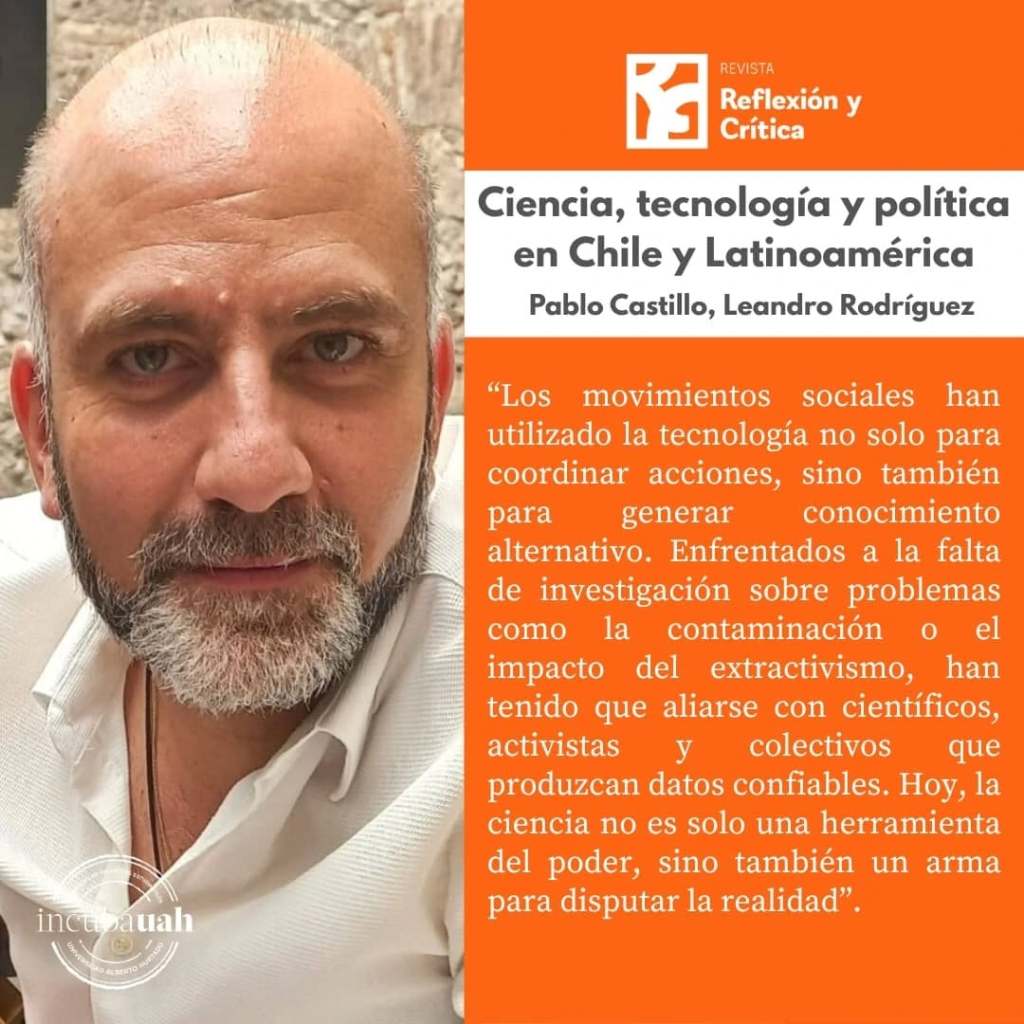
Recomendación de la semana: En esta entrevista, Leandro Rodríguez Medina, en su momento director del Magíster en Ciencia, Tecnología y Sociedad de la Universidad Alberto Hurtado (Chile), analiza cómo la tecnología transforma los movimientos sociales y la política. Aborda desde el activismo digital hasta la producción de conocimiento crítico, destacando la importancia de las alianzas entre ciencia y sociedad para enfrentar desafíos globales. Una reflexión necesaria sobre poder, tecnología y futuros posibles.
Entrevista completa aquí.
¡Visita el sitio y las redes de la Revista Reflexión y Crítica!
It Takes Two to Think
The pick from our editors this week leads us to reflect how science thrives on creativity, and how the best ideas often emerge through conversation. This Nature Biotechnology article by Itai Yanai & Martin J. Lercher highlights how one-on-one discussions spark innovation—free from groupthink, yet rich in improvisation. The key? A trusted “science buddy” and the “Yes, and” mindset: listen, build, and explore without judgment. So, grab a colleague and ask, “What’s your wildest idea?”—then improvise your way to breakthroughs.
Read more here!

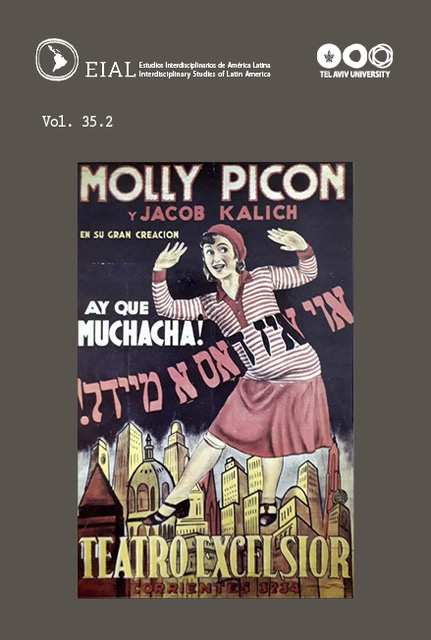
Ciencia y diplomacia cultural en Argentina
Esta semana, nuestres editores recomiendan la lectura de “Ciencia y diplomacia cultural. Becas y becarios internacionales de la Asociación Argentina para el Progreso de las Ciencias desde la década de 1930 hasta la Segunda Guerra Mundial”. El artículo, escrito por Miranda Lida, analiza las becas internacionales de la Asociación Argentina para el Progreso de las Ciencias (1930-1945), y su rol en la diplomacia cultural y la circulación transnacional de saberes bajo la dirección de Bernardo Houssay.
Artículo de acceso abierto disponible en https://eialonline.org/index.php/eial/article/view/1806.
We Live Like Royalty and Don’t Know It
This week our editors’ recommendation is Charles C. Mann’s thought-provoking “We Live Like Royalty and Don’t Know It” essay series in The New Atlantis. Here, Mann explores the invisible infrastructures that sustain modern life—from food systems to public health—revealing how even middle-class comforts surpass Thomas Jefferson’s wildest dreams. Themes of interest for STS scholars examining technology’s hidden governance of daily existence.
Read now: The New Atlantis

Tropical Futurisms in eTropic
This week, our editors recommend to explore eTropic‘s new special issue “Tropical Futurisms: Thinking Futures”, featuring decolonial visions from Indigenous, Afro-diasporic, and tropical communities. This collection reimagines futures through plural knowledge systems and vibrant storytelling.
Read now here.
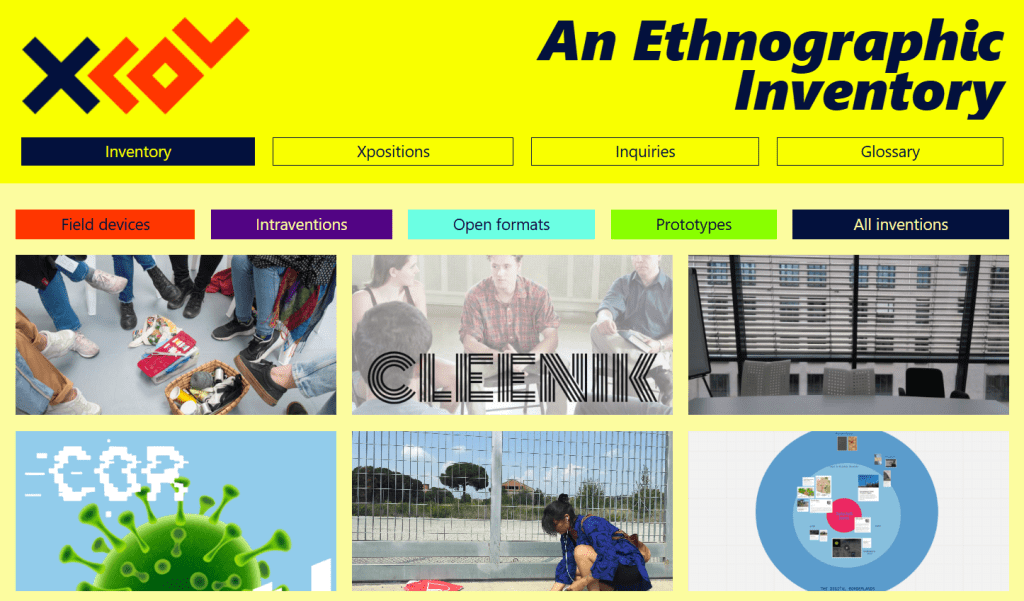
XCOL. An Ethnographic Inventory
This week’s pick features XCOL’s YouTube channel, where you will find valuable resources for Spanish speakers working on contemporary ethnographies, including seven interviews with the authors of An Ethnographic Inventory. Field Devices for Anthropological Inquiry.
Watch now on Youtube and visit their Blog!
Amazons: The Ancestral Future
Explore the CCCB’s rich STS-influenced collection on Amazons: The Ancestral Future, featuring contemporary art, anthropology, and philosophy. This thematic section offers cutting-edge texts and lectures on indigenous knowledge, environmental crises, and technoscience. A must-visit for STS scholars interested in decolonial perspectives.
Dive in CCCB | Amazons.
WeAreSTS podcast
Discover UCL’s WeAreSTS podcast, now in its second season, exploring Science and Technology Studies through research insights, career stories, and student projects. Hosted by Prof. Joe Cain, it’s perfect for anyone curious about STS careers and academic pathways. Listen on Apple Podcasts, Spotify, or YouTube. Want to contribute? UCL STS students can join production teams! Learn more: ucl.ac.uk/sts/podcast.

STS Futures Lab
Explore the STS Futures Lab, an interdisciplinary hub at James Madison University focused on the intersection of science, technology, and society, with an eye on mid- to long-term technological futures. Dive into their research, methods, and collaborative projects on their blog and explore their digital exhibit on the 4S STS Infrastructures Platform.
A must-visit for futures-oriented STS enthusiasts!
Standpoint Theory: Formation, Contestation and Legacies
This compelling interview series features Linda Martín Alcoff, Donna Haraway, and Sandra Harding, whose groundbreaking work shaped standpoint theory. Sandra Harding, discusses its origins in 1970s feminist-Marxist collectives and highlights Tapuya‘s importance for STS scholarship. Alongside Haraway’s critique of spatial metaphors and Alcoff’s political epistemology, these conversations offer vital insights for contemporary debates.
Find more about the podcast and project here.
El final como principio. Mundos por venir
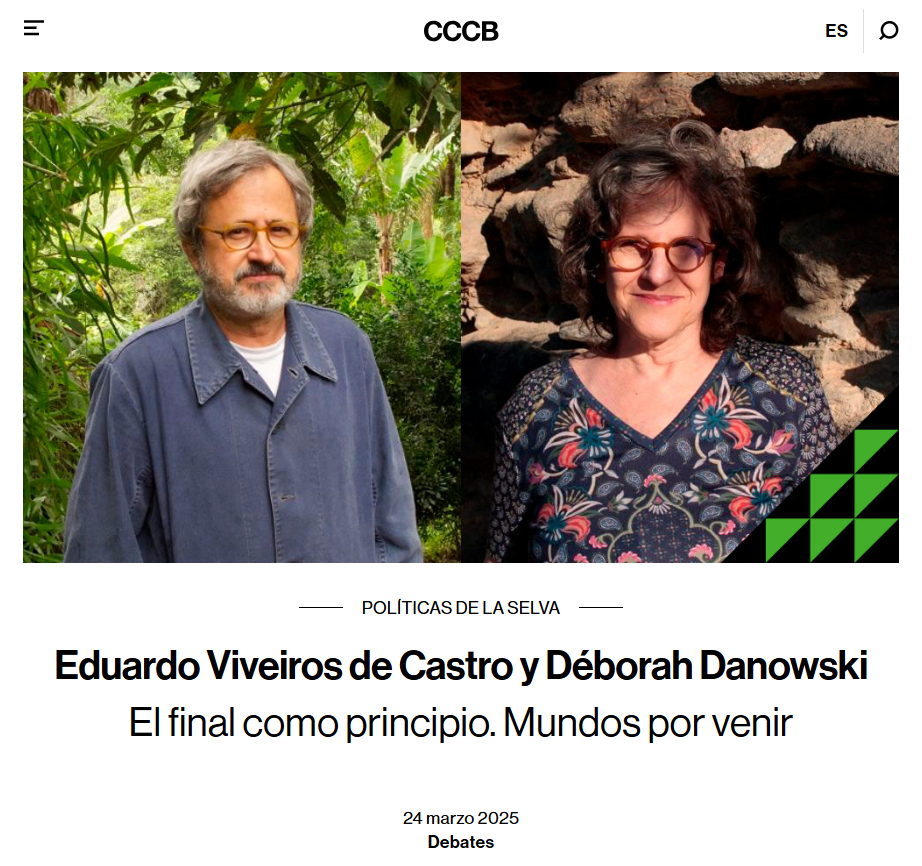
No te pierdas el evento del Centre de Cultura Contemporània de Barcelona (CCCB) con el antropólogo Eduardo Viveiros de Castro y la filósofa Deborah Danowski, quienes discutirán sobre las narrativas contemporáneas del colapso y la riqueza de las cosmologías indígenas. Su trabajo desafía los mitos del progreso occidental, ofreciendo nuevas formas de repensar nuestra relación con el planeta. Imperdible para interesades en pensamiento decolonial y futuros ecológicos.
La cita es el 25 de marzo, 2025.Más información del evento en CCCB.
The HPS Podcast
Dive into The HPS Podcast, now in its fourth season, for thought-provoking conversations on the history and philosophy of science. A standout episode features Holden Thorp, Editor-in-Chief of Science, advocating for integrating HPS and STS into science education. With 12 episodes released so far, this fourth season it’s a must-listen for anyone interested in the intersections of science, history, and society. Stream on Apple Podcasts or Spotify, or read transcripts on their blog.
Distillations Podcast
If you’re curious about the unexpected intersections of science and history, Distillations Podcast is for you. This podcast from the Science History Institute explores diverse topics, from the challenges of Alzheimer’s research to the bizarre tale of New England’s vampire panic. It’s a mix of thoughtful storytelling and surprising details, grounded in research and rich with historical context. A must-listen for anyone who loves science with a side of the unexpected.
Listen here now!
TechnoViews Podcast #18: Moving Crops and the Scales of History
The first recommendation of the year is episode #18 of TechnoViews, where authors John B. Lourdusamy and Tiago Saraiva discuss their award-winning book ‘Moving Crops and the Scales of History’.
Listen now on Spotify, Apple Podcasts, or RSS!
More info about TechnoViews at https://scitechasia.org/

HSS Centennial Podcast: History of Science in Song
Our editors recommendation this week is the HSS Centennial Podcast: History of Science in Song. Here, four historians explore their interest for music and how songs provide unique perspectives into understanding the history of science. Don’t miss this fascinating intersection of melody and scholarship
Listen now at https://www.chstm.org/video/157#24326
Ciencia de Datos con Jocelyn Dunstan Escudero
Check out Ciencia de Datos, a podcast by professor Jocelyn Dunstan Escudero, from the Department of Computer Science at the Pontificia Universidad Católica de Chile.
It delves into data science in the context of Latin America’s political violence and dictatorships, using tech tools to help, for example, identify missing persons. One of the latest episodes focuses on Mexico’s Dirty War.
You can listen to it here!

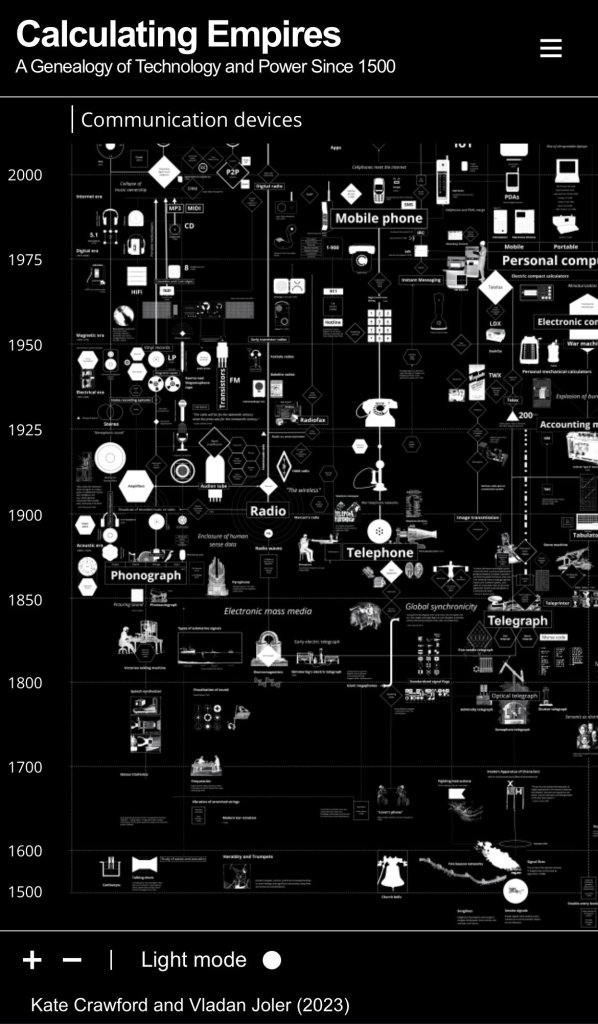
Calculating Empires – A Genealogy of Technology and Power Since 1500
This week our editors recommend Calculating Empires, an in-depth visual study tracing technology and power from 1500 to today. Kate Crawford and Vladan Joler reveal how colonialism, militarization, and automation shaped our current systems of control and extraction. Delve into this ambitious project to understand the historical forces driving today’s tech-dominated world.
Visit Calculating Empires now!
Conversations at the Center
Our editors recommend tuning into the latest episode of the podcast from the Center for Philosophy of Science at the University of Pittsburgh. Join Director Edouard Machery as he converses with Wayne Wu, Associate Professor at Carnegie Mellon, about the intersection of philosophy and cognitive science, exploring topics like attention, perception, and introspection.
Listen to the Conversations at the Center podcast on Spotify or Youtube.
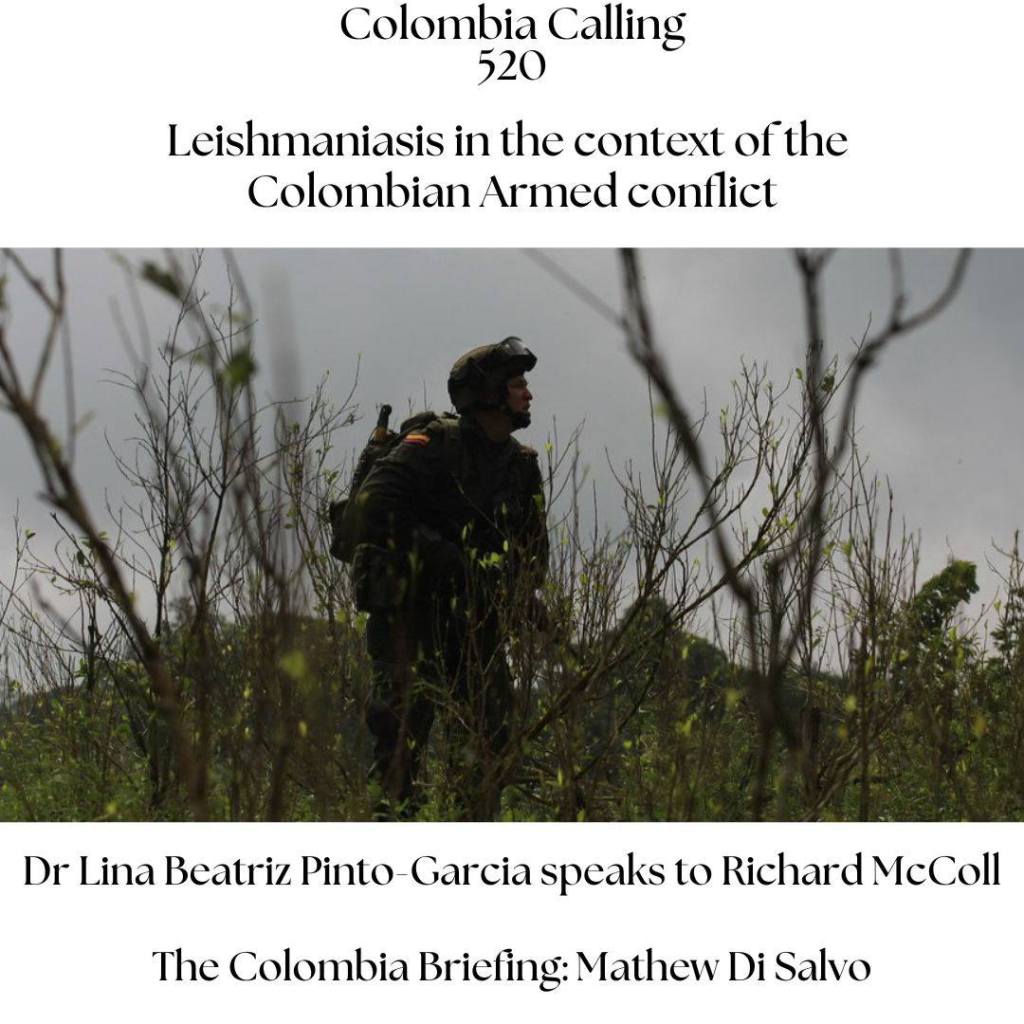
Leishmaniasis in the context of the Colombian Armed conflict
This week, our editors recommend Episode 520 of the Colombia Calling podcast. Here, Dr. Lina Beatriz Pinto-Garcia explores the link between leishmaniasis and the Colombian armed conflict. Her research sheds light on how this stigmatized disease, often labeled the “guerrilla disease,” intertwines with issues of public health, war, and migration.
Listen to it now on Soundcloud!
Science in the age of AI
This week, our editors recommend is The Science in the Age of AI report, which addresses the role of AI-driven technologies in scientific research, including a taxonomy of AI in science. This is a primary source for those working on the history, philosophy and social studies of promissory technologies.
Read and download the report by the Royal Society here!

Critical Ecologies
This week our editors invite you to listen to Critical Ecologies. This podcast, coordinated by Patrick Bresnihan, features grad students from Maynooth University’s Geography Department discussing their research on environmental and spatial justice in Ireland.
Listen on Spotify or in Apple Podcasts.
«Teach Philosophy of Science», by H. Holden Thorp and published in Science (April 2024)
In his article “Teach Philosophy of Science,” H. Holden Thorp emphasizes the need to enhance public trust in science by revising curricula to include the philosophy of science. He argues that understanding science as a constantly evolving field would benefit public trust. This paper is an entry point for North-South conversations about engaging not just science, but also the philosophy that underpins scientific progress and its problems.
Read the complete article at Science.

Filosóficas, el podcast
Esta semana nuestres editores recomiendan Filosóficas, el podcast. Producido por el Instituto de Investigaciones Filosóficas de la UNAM, esta nueva serie explora el mundo de la filosofía y la investigación desde el Instituto. Cada episodio cuenta con presentadores e invitades diferentes, ofreciendo conversaciones únicas y enriquecedoras. Coordinado por Carlos López Beltrán y producido por Alfonso Coronel y su equipo. ¡No te pierdas la primera temporada, disponible en YouTube!
Science in Times of Crisis – An ICS podcast
Podcast recommendation by our Editors! The International Science Council (ICS) presents Science in Times of Crisis, a 5 part podcast series exploring what living in a world of crisis and geopolitical instability means for science and scientists around the world.
Listen or read the episode translations at: https://council.science/podcast/science-in-times-of-crisis/
PRONÓSTICO: Un Podcast sobre Cambio Climático
Explora la ciencia, historia y factores sociales, políticos y económicos del cambio climático con PRONÓSTICO. Dirigido a personas mayores de 15 años, este podcast del Instituto de Ciencias de la Atmósfera y Cambio Climático ofrece una narrativa integral sobre este fenómeno crucial. Escúchalo en Spotify, Google Podcasts o Apple Podcast.
¡Todos sus episodios aquí!
This week our editors invite you to read Indigenous Knowledge and Material Histories: The Example of Rubber by Jens Soentgen, which has open acces for a limited time. Discover the untold stories of rubber through an Environmental Humanities lens. Jens Soentgen reveals that indigenous peoples of South America invented crucial rubber products, using a process akin to organic vulcanization. Contrary to popular belief, rubber’s history didn’t begin with Charles Goodyear’s vulcanization. This insightful book highlights the ecological advantages of indigenous rubber over industrial versions.
For free online from May 24th to June 7th, 2024.
Explore more at: Cambridge Elements

The Ethnography Atelier podcast discusses research methods with qualitative researchers. They talk to guests about their experiences of conducting research in and around organizations, the challenges they faced and the understandings they gained.
Also, they welcome suggestions for episodes!
Available at: www.ethnographyatelier.org/podcast.
Immerse yourself in insightful stories with Distillations, a podcast by the Science History Institute. Find out more about science-related history mysteries, from Alzheimer’s research to 19th-century vampire panic.
And don’t miss the new season “Innate: How Science Invented the Myth of Race,” exploring the origins and legacies of racism in American science and medicine.
Avaliable on Apple Podcasts or at their Website.


For this week, our editors have recommended Blood in the Machine, a BBC podcast by Brian Merchant that explores the Luddite rebellion in 1811, and devles into how the rise of the machine threatens the livelihoods of traditional cloth workers.
Hear it at www.bbc.co.uk/programmes/m001x4kg.
Explore The Good Robot podcast and book edited by Kerry McInerney and Eleanor Drage. This podcast invites experts to tackle questions about good technology and feminism’s role. The accompanying book showcases diverse feminist perspectives on reshaping technology. Join the conversation on building a better technological future!
Read and listen to them at: www.thegoodrobot.co.uk/.
Last February, Lee Vinsel kicked off Peoples & Things, a newsletter about humanistic and social scientific studies of human life with technology. We also recommend the Peoples & Things podcast (which started as an intro class to technology studies).
Read more about this amazing project at peoples-things.ghost.io/introducing-the-peoples-things-newsletter/.
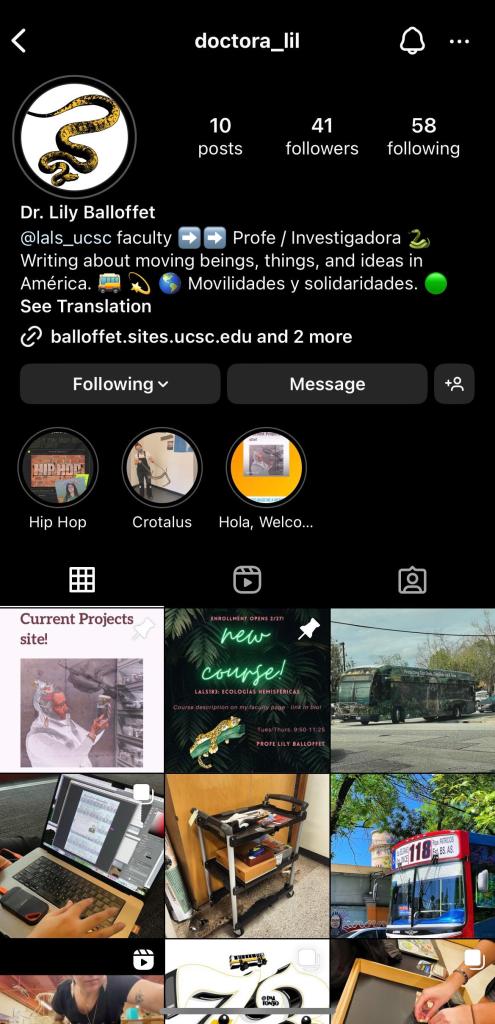
This week’s selection is Dr. Lily Balloffet’s (University of California Santa Cruz) project on Instagram. The project delves into the transnational dynamics of snake venom and antidote circulation across the continent, particularly between the US and Central America.
Follow her at www.instagram.com/doctora_lil?igsh=d3UwN3A1d2t0Znhx

DICTA, Fundación para el Desarrollo Interdisciplinario de la Ciencia, la Tecnología y las Artes is a hub for interdisciplinary collaboration in science, technology, and the arts. By facilitating connections among individuals and institutions based on shared social values, DICTA cultivates an environment where specific projects aimed at enriching lives through interdisciplinary initiatives are developed.
Explore further and listen to their podcast at their website: https://www.dicta.cl/
This week our Editor’s recommendation is the podcast New Books in Systems & Cybernetics, in which Marshall Poe leads enlightening author-interview talks with scholarly authors and their new books.
Explore on Apple Podcasts: podcasts.apple.com/au/podcast/new-books-in-systems-and-cybernetics/id1329214995
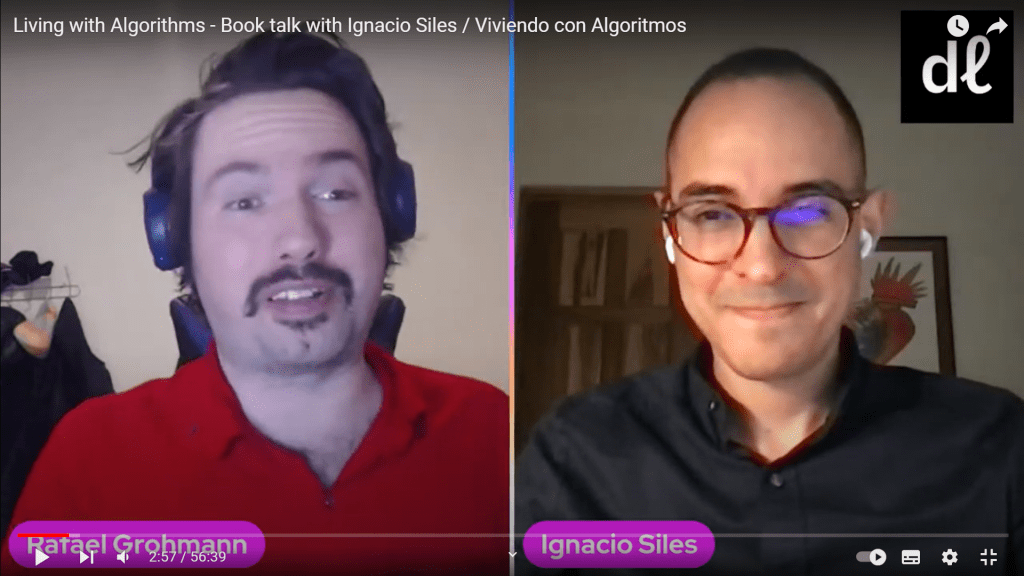
Our featured content this week is an insightful book talk! Rafael Grohmann (DigiLabour) chats with Ignacio Siles about his latest work, Living with Algorithms. The book discusses user dynamics in the global south through Netflix, Spotify, and TikTok, and dive into the user’s agency in shaping the algorithmic landscape.
Find the book at: mitpress.mit.edu/9780262545426/living-with-algorithms/
Welcome to Platypus, the hub of CASTAC’s exploration into Anthropology, Science, Technology, and Computing. Here you can find blog entries featuring reviews, opinions, and diverse contributions. Also, tune in to the Platypod podcast for more.
Platypus aim is to promote dialogue on theories, tools, and social interactions that explore questions at the intersection of anthropology and science and technology studies.
Visit them at: https://blog.castac.org/
Also, follow them on X (@CASTAC_AAA) for updates.

Social Studies of Sciences holds two very interesting episodes in it’s podcast series with the same name. One follows a conversation between John Tresch and Bruno Latour on the later’s project on ‘modes of existence’. The other one focuses on the sonifacation of scientific data an its popularization in recent years.
Listen to the Social Studies of Science podcast here.
 Tapuya: Latin American Science, Technology and Society